

Global Smart Home Security Market Growth Fueled by AI, IoT, and Smart Surveillance Systems
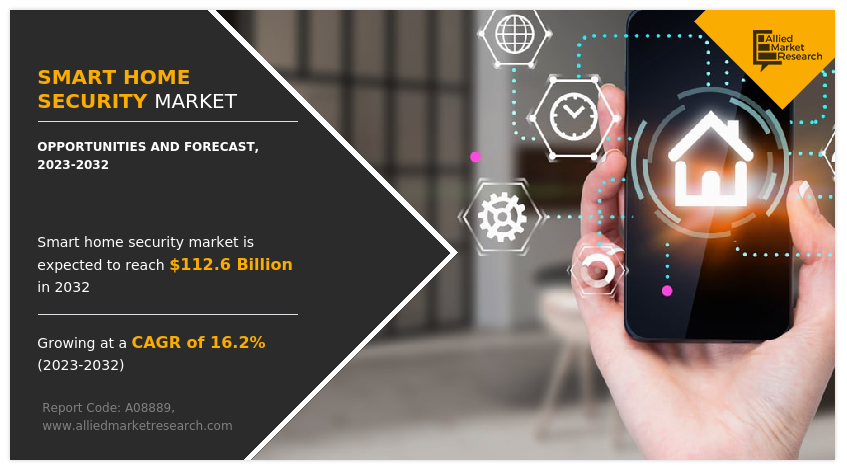
Smart home security market is projected to reach $112.6 billion by 2032, driven by AI, IoT, and smart monitoring systems.
Growing adoption of connected security devices and smart homes fuels global smart home security market growth.”
WILMINGTON, DE, UNITED STATES, June 1, 2026 /EINPresswire.com/ -- According to a new report published by Allied Market Research, the smart home security market size was valued at $25.8 billion in 2022 and is projected to reach $112.6 billion by 2032, growing at a CAGR of 16.2% from 2023 to 2032. Rising concerns regarding residential safety, increasing adoption of smart home technologies, and rapid advancements in artificial intelligence (AI), Internet of Things (IoT), and cloud-based security platforms are driving significant growth across the global market.— Allied Market Research
Download PDF Brochure: https://www.alliedmarketresearch.com/request-sample/A08889
Introduction
The concept of home security has evolved dramatically over the past decade. Traditional alarm systems and standalone surveillance devices are increasingly being replaced by intelligent, connected security ecosystems that offer real-time monitoring, remote access, and automated threat detection. This transformation has fueled substantial growth in the smart home security market worldwide.
Smart home security systems utilize IoT-enabled devices such as smart cameras, motion sensors, smart locks, video doorbells, alarms, and cloud-based monitoring platforms. These technologies enable homeowners to monitor and manage their properties remotely through smartphones, tablets, and other connected devices.
The growing popularity of connected homes, combined with increasing concerns regarding burglary, property theft, and personal safety, has encouraged consumers to invest in advanced security solutions. Modern systems provide instant notifications, live video feeds, remote locking capabilities, and AI-powered analytics that significantly enhance residential security.
As digital lifestyles continue to expand and consumers seek greater control over their homes, the smart home security market is expected to witness strong growth throughout the forecast period.
Understanding Smart Home Security Systems
Smart home security refers to the integration of connected devices and intelligent technologies designed to protect residential properties from unauthorized access, theft, and security threats. Unlike conventional security systems that operate independently, smart security solutions communicate through internet-connected networks and provide real-time monitoring capabilities.
These systems typically include surveillance cameras, smart locks, motion detectors, door and window sensors, alarm systems, facial recognition technology, and cloud-based security platforms. Homeowners can access and control these devices remotely through dedicated mobile applications.
One of the key advantages of smart home security solutions is their ability to provide continuous monitoring. Even when users are away from home, they receive instant alerts regarding suspicious activities, unauthorized access attempts, or unusual movements. This proactive approach significantly improves home protection and peace of mind.
The increasing integration of AI and machine learning technologies is further enhancing the effectiveness of smart home security systems by enabling advanced threat detection and automated responses.
Market Dynamics Driving Growth
Rising Concerns About Residential Security
One of the primary factors fueling the smart home security market is the growing concern regarding home safety and property protection. As urban populations expand and residential developments increase, homeowners are seeking more effective ways to secure their properties.
Incidents involving burglary, package theft, unauthorized entry, and vandalism have heightened awareness regarding the importance of advanced security systems. Consumers are increasingly adopting connected security devices that provide real-time monitoring and immediate alerts.
Unlike traditional alarm systems that often require manual intervention, smart security solutions offer automated notifications and remote management capabilities. These features allow homeowners to respond quickly to potential threats, making them highly attractive security investments.
Growth of Smart Home Ecosystems
The expansion of smart home ecosystems is another major factor supporting the growth of the smart home security market. Consumers are increasingly adopting connected devices such as smart speakers, smart lighting systems, smart thermostats, and home automation platforms.
Security solutions are becoming an integral component of these ecosystems, allowing users to manage multiple home functions through a single application or voice assistant. Integration with platforms powered by AI enables seamless communication between devices and enhances overall convenience.
As smart homes become more mainstream globally, the demand for intelligent security solutions is expected to increase substantially.
Increasing Urbanization and Connected Living
Rapid urbanization is creating greater demand for intelligent residential infrastructure. Urban residents often seek technologies that improve convenience, efficiency, and safety within increasingly complex living environments.
Smart home security solutions support these objectives by providing automated access control, visitor monitoring, and remote surveillance capabilities. Apartment owners, independent homeowners, and property managers are increasingly investing in connected security technologies to improve residential safety.
The trend toward connected living is expected to remain a significant growth driver for the smart home security market over the coming years.
Role of AI and IoT in Smart Home Security
Artificial intelligence and Internet of Things technologies are transforming how residential security systems operate. AI-powered analytics enable security devices to identify unusual behavior patterns, recognize faces, distinguish between humans and pets, and reduce false alarms.
IoT connectivity allows multiple security devices to communicate and share information in real time. For example, a motion sensor can automatically trigger a security camera to begin recording while simultaneously sending a notification to the homeowner’s smartphone.
Machine learning algorithms continuously improve threat detection accuracy by analyzing behavioral patterns and historical data. These capabilities help security systems become more proactive and effective over time.
Cloud computing further enhances system performance by enabling remote access, secure data storage, and advanced analytics. Together, AI, IoT, and cloud technologies are creating more intelligent and reliable home security solutions, driving continued expansion of the smart home security market.
Hardware Segment Dominates Market Revenue
Based on component, the hardware segment dominated the smart home security market in 2022 and is expected to maintain its leadership position during the forecast period.
The hardware segment includes smart cameras, smart locks, motion detectors, sensors, alarms, video doorbells, and biometric access systems. Rising consumer demand for physical security devices remains a key factor supporting segment growth.
Homeowners increasingly prioritize visible security measures that deter potential intruders while providing comprehensive monitoring capabilities. Advanced hardware solutions offer high-definition video surveillance, night vision capabilities, facial recognition, and wireless connectivity.
As concerns regarding residential safety continue to increase, investments in smart security hardware are expected to remain strong.
Procure This Report (216 Pages PDF with Insights, Charts, Tables, and Figures): https://www.alliedmarketresearch.com/smart-home-security-market/purchase-options
Software Segment Expected to Witness Fastest Growth
Although hardware currently generates the largest revenue share, the software segment is anticipated to experience the fastest growth during the forecast period.
Modern smart home security systems rely heavily on software platforms that manage device connectivity, data analytics, threat detection, and remote monitoring. AI-powered applications enable homeowners to access live video feeds, receive instant alerts, and manage security settings from anywhere.
The growing adoption of cloud-based security management platforms is creating substantial opportunities for software providers. These solutions offer scalability, improved functionality, and enhanced user experiences while reducing the complexity of managing multiple security devices.
As connected ecosystems continue to evolve, software will play an increasingly critical role in shaping the future of the smart home security market.
Smart Cameras and Monitoring Systems Lead Device Adoption
By device type, the smart camera and monitoring system segment accounted for the largest share of the smart home security market in 2022.
Consumers increasingly view video surveillance as one of the most effective security measures available. Smart cameras provide real-time video streaming, motion detection, cloud storage, facial recognition, and two-way communication capabilities.
The popularity of video doorbells has further accelerated demand for connected monitoring systems. These devices allow homeowners to see, hear, and communicate with visitors remotely, improving convenience and security.
As camera technologies become more sophisticated and affordable, adoption rates are expected to increase significantly across residential markets worldwide.
Independent Houses Account for Largest Application Share
Based on application, the independent house segment generated the highest revenue in 2022.
Owners of standalone residential properties often require comprehensive security solutions due to larger perimeters and multiple access points. Smart home security systems provide enhanced visibility and control, enabling homeowners to monitor their properties effectively.
Independent homeowners are increasingly investing in integrated security ecosystems that combine surveillance cameras, smart locks, alarms, and motion sensors into a unified platform.
Growing awareness regarding residential security and increasing disposable incomes are expected to continue supporting adoption within this segment.
Impact of COVID-19 on the Smart Home Security Market
The COVID-19 pandemic accelerated digital transformation across numerous industries and positively influenced the smart home security market.
As people spent more time at home during lockdowns, interest in residential security technologies increased significantly. Consumers became more focused on protecting their homes, families, and personal assets.
The pandemic also accelerated the adoption of AI, IoT, cloud computing, and automation technologies. Security providers increasingly integrated these capabilities into their solutions to improve operational efficiency and user experiences.
Remote monitoring became especially valuable during periods of restricted movement, encouraging greater adoption of connected security devices. Businesses and consumers alike recognized the benefits of intelligent security systems capable of providing real-time visibility and remote access.
Consequently, the pandemic created new growth opportunities that continue to support long-term market expansion.
Technological Innovations Reshaping the Industry
The smart home security market continues to benefit from rapid technological innovation.
Biometric authentication technologies, including fingerprint recognition and facial recognition, are becoming increasingly common in modern security systems. These features provide enhanced protection while simplifying user access.
Artificial intelligence is improving video analytics by enabling systems to identify suspicious activities automatically. AI-powered cameras can distinguish between routine movement and potential threats, reducing false alarms.
Voice-controlled security management is also gaining popularity as consumers increasingly utilize smart assistants to manage connected devices. Integration with home automation ecosystems enables seamless control of locks, cameras, alarms, and lighting systems.
In addition, advancements in cloud computing, edge computing, and wireless connectivity are improving system performance, reliability, and scalability.
For example, in April 2020, Qualcomm collaborated with BOE Technology Group to develop advanced display products featuring Qualcomm 3D Sonic ultrasonic fingerprint sensor technology. Such innovations demonstrate the growing focus on strengthening smart security capabilities through advanced authentication methods.
Regional Analysis
North America Leads Global Market
North America accounted for the largest share of the smart home security market in 2022. The region benefits from high consumer awareness, advanced digital infrastructure, and strong adoption of smart home technologies.
Homeowners in the United States and Canada increasingly prioritize connected security solutions that offer convenience, automation, and real-time monitoring capabilities. The presence of major technology providers and security companies further supports regional growth.
Investments in AI, IoT, and home automation technologies continue to strengthen North America’s position as a leading market for smart home security solutions.
Asia-Pacific Emerging as Fastest-Growing Region
Asia-Pacific is expected to register the highest growth rate during the forecast period.
Rapid urbanization, expanding middle-class populations, and increasing investments in smart city initiatives are creating favorable conditions for market expansion. Countries such as China, India, Japan, South Korea, and Singapore are witnessing growing adoption of connected home technologies.
The increasing availability of affordable smart devices, improved internet connectivity, and rising awareness regarding residential safety are expected to drive significant growth across the region.
As governments continue investing in digital infrastructure and smart city development, Asia-Pacific is likely to become one of the most dynamic markets for smart home security solutions.
Competitive Landscape
The smart home security market remains highly competitive, with companies focusing on innovation, product launches, strategic partnerships, and business expansion initiatives.
Leading participants are investing heavily in AI-powered analytics, cloud platforms, biometric security, and advanced monitoring solutions to strengthen their market positions.
Key companies operating in the market include Abode Systems, ADT, ASSA ABLOY, Frontpoint Security Solutions, Hikvision, Honeywell, Ingersoll Rand, Johnson Controls, Bosch, and Vivint Smart Home.
These organizations continue to expand their product portfolios and technological capabilities to meet evolving consumer demands.
Get a Customized Research Report: https://www.alliedmarketresearch.com/request-for-customization/A08889
Future Outlook
The future of the smart home security market appears highly promising as residential consumers increasingly embrace connected technologies and intelligent automation. Rising security concerns, expanding smart home adoption, and continuous technological advancements will remain key growth drivers.
The integration of AI, machine learning, IoT, cloud computing, and biometric authentication is expected to create more sophisticated and user-friendly security ecosystems. Enhanced connectivity through 5G networks will further improve system responsiveness and real-time monitoring capabilities.
As consumers seek greater convenience, safety, and control over their living environments, demand for smart home security solutions is expected to continue rising globally. Supported by strong technological innovation and growing investments in connected home infrastructure, the smart home security market is poised for substantial long-term growth through 2032.
Trending Reports in Energy and Power Industry:
Smart Home Security Market
https://www.alliedmarketresearch.com/smart-home-security-market-A08889
AI in IoT Market
https://www.alliedmarketresearch.com/ai-in-iot-market-A12590
Artificial Intelligence in Education Market
https://www.alliedmarketresearch.com/artificial-intelligence-in-education-sector-market
Oil and Gas Data Management market
https://www.alliedmarketresearch.com/oil-and-gas-data-management-market
Asia-Pacific Smart Building market
https://www.alliedmarketresearch.com/asia-pacific-smart-building-market-A14204
Physical security market
https://www.alliedmarketresearch.com/physical-security-market
Threat Intelligence Market
https://www.alliedmarketresearch.com/threat-intelligence-market
North America Family/Indoor Entertainment Centers Market
https://www.alliedmarketresearch.com/north-america-family-entertainment-centers-market-A05970
About Us
Allied Market Research (AMR) is a full-service market research and business-consulting wing of Allied Analytics LLP based in Portland, Oregon. Allied Market Research provides global enterprises as well as medium and small businesses with unmatched quality of "Market Research Reports" and "Business Intelligence Solutions." AMR has a targeted view to provide business insights and consulting to assist its clients to make strategic business decisions and achieve sustainable growth in their respective market domain.
Pawan Kumar, the CEO of Allied Market Research, is leading the organization toward providing high-quality data and insights. We are in professional corporate relations with various companies and this helps us in digging out market data that helps us generate accurate research data tables and confirms utmost accuracy in our market forecasting. Each and every data presented in the reports published by us is extracted through primary interviews with top officials from leading companies of domain concerned. Our secondary data procurement methodology includes deep online and offline research and discussion with knowledgeable professionals and analysts in the industry.
David Correa
Allied Market Research
+ + + + + + + + + + + + +1 800-792-5285
email us here
Visit us on social media:
LinkedIn
Facebook
YouTube
X
Legal Disclaimer:
EIN Presswire provides this news content "as is" without warranty of any kind. We do not accept any responsibility or liability for the accuracy, content, images, videos, licenses, completeness, legality, or reliability of the information contained in this article. If you have any complaints or copyright issues related to this article, kindly contact the author above.
